 Lithium Battery Electrolyte Additives: Key Solutions for Enhancing Battery Performance and Safety
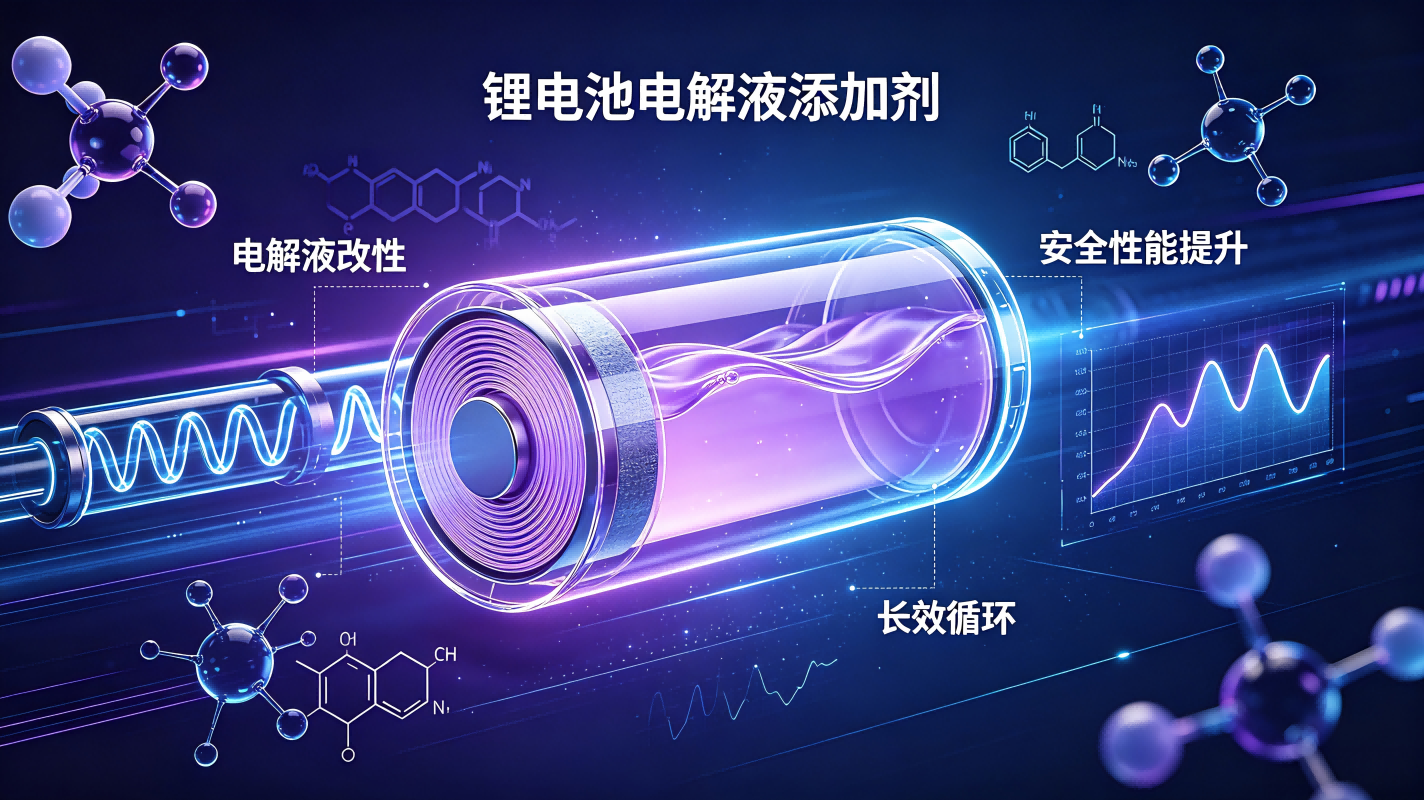
In today's era of energy transition, lithium batteries, as core energy storage devices, are widely used in electric vehicles, smartphones, and other equipment. However, battery performance and safety are often limited by the stability of the electrolyte. Lithium battery electrolyte additives are the key to solving this pain point—they enhance battery cycle life and safety by optimizing the chemical properties of the electrolyte. Many users frequently encounter issues such as battery capacity fading and performance degradation at high temperatures, which stem from electrolyte decomposition or side reactions. Adding lithium battery electrolyte additives can effectively suppress these adverse phenomena and ensure efficient battery operation.
Users report that battery capacity drops significantly after several hundred cycles, which is usually because the electrolyte reacts with the electrodes during charge and discharge, forming an unstable interface. Lithium battery electrolyte additives reduce side reactions by forming a stable solid electrolyte interphase (SEI film), thereby extending battery life. For example, vinylene carbonate (VC), as a common additive, can significantly improve cycling stability.
Under high-temperature or overcharge conditions, batteries are prone to thermal runaway, leading to fire or explosion. Lithium battery electrolyte additives such as fluoroethylene carbonate (FEC) can improve the thermal stability of the electrolyte and prevent decomposition and gas generation. These additives play a "protective umbrella" role in lithium-ion batteries and are especially suitable for high-energy-density batteries.
Different devices have different battery requirements. For electric vehicles, high power output is needed, and lithium battery electrolyte additives such as LiFSI (lithium bis(fluorosulfonyl)imide) can improve conductivity; for energy storage systems, long cycle life is required, and additives such as PS (1,3-propane sultone) can optimize the interface. Our products cover a wide range of additives to meet various needs.
The dosage of additives must be precisely controlled, as excessive amounts may cause side effects. For example, lithium battery electrolyte additives typically account for 1%–5% of the total electrolyte, and the specific ratio must match the base electrolyte. We provide customized formulation services to ensure additive-electrolyte compatibility and enhance overall performance.
Our lithium battery electrolyte additives undergo rigorous testing and use high-purity raw materials to ensure no impurity interference. Compared with conventional products, they can extend battery cycle life by more than 30% while reducing internal resistance and improving charging efficiency. In terms of safety, the additives suppress gas generation and pass UL safety certification. By choosing our services, you will receive technical support and sample testing to reduce development risks.
Lithium battery electrolyte additives are a powerful tool for optimizing battery performance. Whether you are a battery manufacturer or a researcher, adding the right additives can significantly enhance product competitiveness. Welcome to contact us for free consultation and samples, and let us explore more efficient and safer battery solutions together.

Sales Department:0517-87280509
Email:sales@hicomer.com
Procurement Section:0517-87801599
Human Resources & Administration Department:18015151561、18015151879
Address: No. 160 Fuxing Road, Hongze Economic Development Zone, Huai'an City, Jiangsu Province
Address: No. 8 Guangxin Road, Huai'an Industrial Park, Jiangsu Province

Official WeChat Account
 32082902000171 苏ICP备2026041924号 design by sq
